Local business built by friends, doing striping the right way. | Call or Text: 703-930-2200
Understanding Alligator Cracking in Pavements Meta description Alligator cracking is a com
Alligator cracking is a common pavement issue across DC, Maryland, and Virginia. Learn what causes it, why sealcoating alone will not fix it, and what steps need to happen first.
2026 BLOG
3/25/20262 min read
Introduction to Alligator Cracking
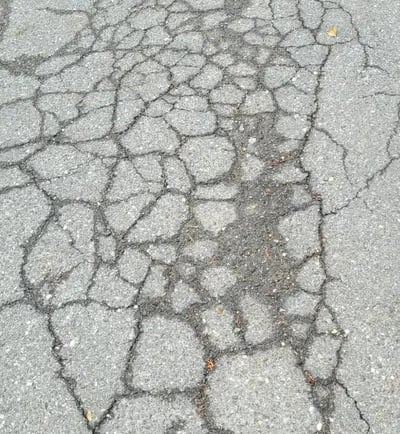
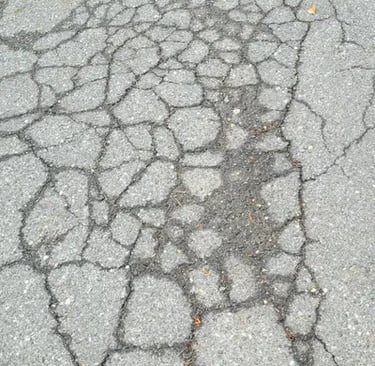
Pavement issues are commonplace across the regions of Washington, D.C., Maryland, and Virginia, with alligator cracking being one of the most frequently observed problems. This phenomenon is characterized by a scale-like pattern on asphalt surfaces, often resembling a reptile's skin. Understanding the mechanics behind alligator cracking is essential for maintaining the integrity of pavements in urban and suburban environments.
Causes of Alligator Cracking
The primary culprit behind alligator cracking is a cycle of freeze-thaw events that forces water into the depths of asphalt surfaces. When temperatures drop, water can seep into cracks and crevices, where it expands as it freezes. This expansion leads to gradual weakening of the asphalt's base layer. Over time, the cumulative damage from these cycles creates interconnecting fractures that result in the distinct alligator cracking pattern.
Repairing Alligator Cracking
Addressing the problem of alligator cracking requires more than a simple sealcoating application. While sealcoating is beneficial for extending the life of pavement and enhancing its appearance, it does not resolve underlying issues. To effectively remediate alligator cracking, it is imperative to call upon a qualified paving contractor. They will first need to identify and cut out the damaged sections of the asphalt. Following this, the base layer must be expertly repaired, and fresh asphalt should be patched in to restore the pavement's structural integrity.
Importantly, once the new asphalt has been applied, it requires adequate time to cure. This curing period is crucial and can last anywhere from 90 days to a full year, as it allows the natural oils within the asphalt to release. Only after this curing period will it be appropriate to apply sealcoating, ensuring that the sealant bonds effectively with the new asphalt.
Conclusion
Alligator cracking is a significant issue that can affect the lifespan and functionality of asphalt pavements in regions susceptible to freeze-thaw cycles. By understanding its causes and the necessary steps for repair, property owners can take proactive measures to maintain their pavements and prevent further deterioration. Engaging a professional asphalt contractor for repairs and following up with proper maintenance practices are essential steps toward achieving long-lasting, resilient pavements.
We are happy to answer any of your striping questions. As a leading painting contractor serving DC, Maryland, and Northern Virginia, we are dedicated to delivering high-quality results. Contact us today for a free estimate and see how we can enhance your parking areas.
Serving: District of Columbia, Montgomery County, Prince George's County, Arlington County, Fairfax County, Loudoun County, Prince William County, the City of Alexandria, the City of Fairfax, the City of Falls Church, the City of Manassas, City of Manassas Park, Richmond and Charlottesville.
Potomac Falls Striping Services Copr. 2026